
Steak blog · Around the world · · 2 min read
How America's top steakhouses dry-age their beef
By the Amarone Italian Food & Steak team, a steakhouse in Zielona Góra since 2007
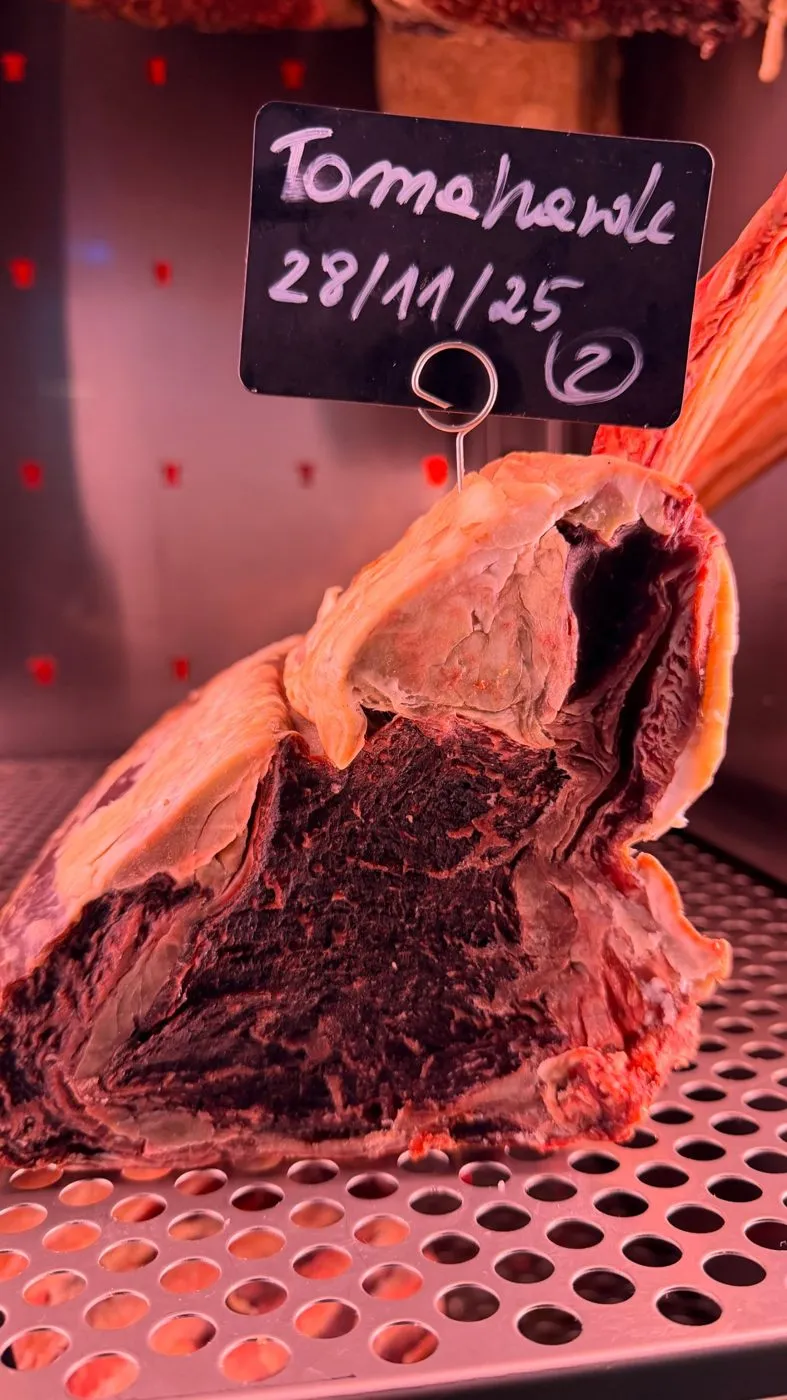
The United States is the home of the steakhouse, and dry aging is treated there as a craft. We looked at how four well-known places do it. Each has a different take on the same thing: beef, cold air and time.
David Burke Prime, Connecticut: a patent on Himalayan salt
Chef David Burke patented his ageing method (the patent was first filed in 2009). The beef ages in a room lined with pink Himalayan salt, arranged so that as much salt surface as possible is exposed to the air, with UV lights keeping it sterile. An 18-ounce ribeye ages for 30 days there, a 38-ounce one for 55 days.
The takeaway: the salt does not salt the meat; it helps keep humidity stable and the air clean. That is why salt-block walls are now standard in professional dry-aging cabinets.
Chr Steak, Georgia: an ageing room behind glass
In Gainesville, an hour from Atlanta, chef Jeremy Green built a glass-walled ageing room. Guests waiting for a table can watch the beef, tagged and dated. Inside it is about 34°F (1°C), with low humidity and salt walls. Most cuts age for at least 30 days and large bone-in tomahawks for up to 140 days. Tomahawks are finished at the table with a flaming sprig of rosemary.
The takeaway: ageing is also a show. A guest who sees the date on a piece of beef understands what they are paying for.
Peter Luger, Brooklyn: family selection and butter on the platter
Peter Luger is one of the most famous steakhouses in the world. The owning family hand-picks the beef at the market and it ages in the restaurant’s own ageing room. The steak is salted and cooked under a very hot broiler, placed on a platter with clarified butter, returned to the heat, sliced and carried straight to the table, still sizzling.
The takeaway: the secret is not one trick but consistency: the same selection, the same heat, the same way of serving for decades.
The Capital Grille: dry aging at a chain
The Capital Grille chain dry-ages its beef for about 18–24 days, and on-site butchers hand-carve it in each restaurant. Proof that dry aging does not have to be limited to a few exclusive places.
How we do it at Amarone
In Zielona Góra, Poland, we dry-age beef in our own ageing cabinet: ribeye and New York Strip for up to 60 days, plus a tomahawk for the whole table to share. Every cut carries its ageing date and weight; the current list is in our steak menu. How the process works is explained in our article on dry aging.
Book a table online via Tableo or call +48 68 327 01 67. Amarone, Żeromskiego 16, on the pedestrian street in Zielona Góra.
These steaks are on our steak menu now
On steqr.pl every steak has a description and a short film, and the list shows what is in our ageing cabinet and kitchen today.
Full steak menuQuestions and answers
How long do American steakhouses dry-age steak?
In the examples described, from about 18–24 days at a large chain, through 30–55 days at premium restaurants, to as long as 140 days for the largest bone-in cuts.
Why Himalayan salt in an ageing room?
Salt blocks help keep humidity stable and the air clean. One Connecticut steakhouse patented its method of ageing beef in a room lined with Himalayan salt.
Can I eat American-style dry-aged steak in Poland?
Yes. At Amarone in Zielona Góra we dry-age ribeye and New York Strip for up to 60 days in our own cabinet, and every cut carries its ageing date and weight.